3. Listening Skills
Listening Skills
Why Listening Matters
Listening is the most underrated communication skill. We spend about 45% of our time listening, yet most people remember only 25-50% of what they hear. Effective listening builds trust, reduces misunderstandings, and deepens relationships.
Types of Listening
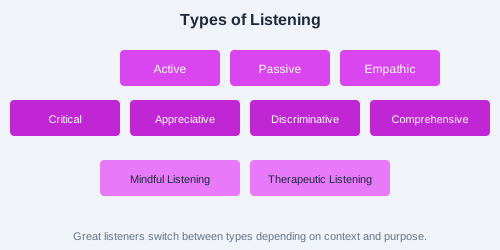
Figure: Different listening types for different situations.
- Active Listening — Fully concentrating, understanding, responding, and remembering
- Empathic Listening — Understanding the speaker's emotions and perspective
- Critical Listening — Evaluating messages for logic and validity
- Appreciative Listening — Listening for enjoyment (music, stories)
- Discriminative Listening — Detecting changes in tone, pitch, speed
- Mindful Listening — Being fully present without judgment
Principles of Effective Listening
- Be Present — Put away distractions, maintain eye contact
- Don't Interrupt — Let the speaker finish their thoughts
- Show Engagement — Nod, lean in, use verbal affirmations ("I see," "Go on")
- Paraphrase & Summarize — "So what you're saying is..." to confirm understanding
- Ask Open-Ended Questions — Encourage elaboration beyond yes/no
- Withhold Judgment — Listen to understand, not to reply or evaluate
Barriers to Listening
- Internal Noise — Preoccupation, biases, emotional reactions
- External Noise — Physical distractions, technology interruptions
- Pseudolistening — Looking attentive while thinking about something else
- Selective Listening — Only hearing what you want to hear
- Defensive Listening — Taking comments as personal attacks
Misconceptions About Listening
- "Listening is the same as hearing" (it's not — hearing is passive, listening is active)
- "Good listeners are naturally quiet" (they ask great questions too)
- "I can multitask while listening" (your brain cannot fully focus on both)
- "Listening means agreeing" (understanding ≠ agreement)
Practice Task: In your next three conversations, practice active listening deliberately. After each, write down: (1) Did I interrupt? (2) Did I paraphrase back? (3) What did I learn that I might have missed otherwise? Then try a "listening-only" exercise — spend 5 minutes letting someone talk while you only listen, without responding or asking questions.