4. Step-by-Step Architecture
A production ML system architecture built step by step, from raw data to deployed prediction.
Step 1: Data Ingestion
Raw data enters the system through batch or streaming paths.
# Ingestion architecture
Batch path: Daily database dump → Airflow → S3 raw bucket
Streaming path: User events → Kafka → Flink → S3 raw bucket + Feature Store
Step 2: Data Storage
Raw data is stored in a data lake (S3, ADLS, GCS). Processed features go to a feature store (Feast, Tecton). Labels are stored in a data warehouse (Snowflake, BigQuery).
Step 3: Preprocessing
Spark or Dask jobs transform raw data into features. The same transformation logic must be used in training AND serving to avoid training-serving skew.
# Consistent transformation (shared code)
def compute_features(raw):
    return {
        "amount_log": log(raw.amount + 1),
        "hour_of_day": raw.timestamp.hour,
        "is_weekend": raw.timestamp.weekday() >= 5,
        "merchant_risk": lookup_merchant_risk(raw.merchant_id)
    }
Step 4: Training
Training jobs read features from the offline feature store, train models using frameworks (PyTorch, XGBoost, TensorFlow), and log results to the model registry.
Step 5: Model Evaluation & Registration
Models are evaluated against champion metrics. If they win, they are registered and staged for deployment. Approval gates may require manual review.
Step 6: Deployment
The model is deployed to a serving infrastructure. Common patterns: rolling update, canary deployment, shadow deployment.
Step 7: Serving
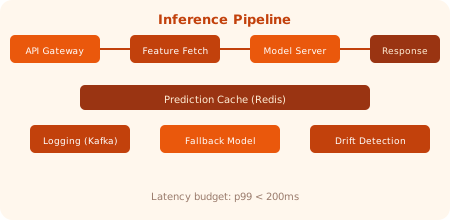
Inference requests hit the serving layer: API gateway → feature fetch → model server → response. Predictions are cached, logged, and monitored.
Step 8: Monitoring & Feedback
Predictions and features are logged. Drift detection runs continuously. Ground truth (when available) is collected for accuracy computation. Degradation triggers alerts and retraining.